
From Nothing to Something Meaningful

About Us

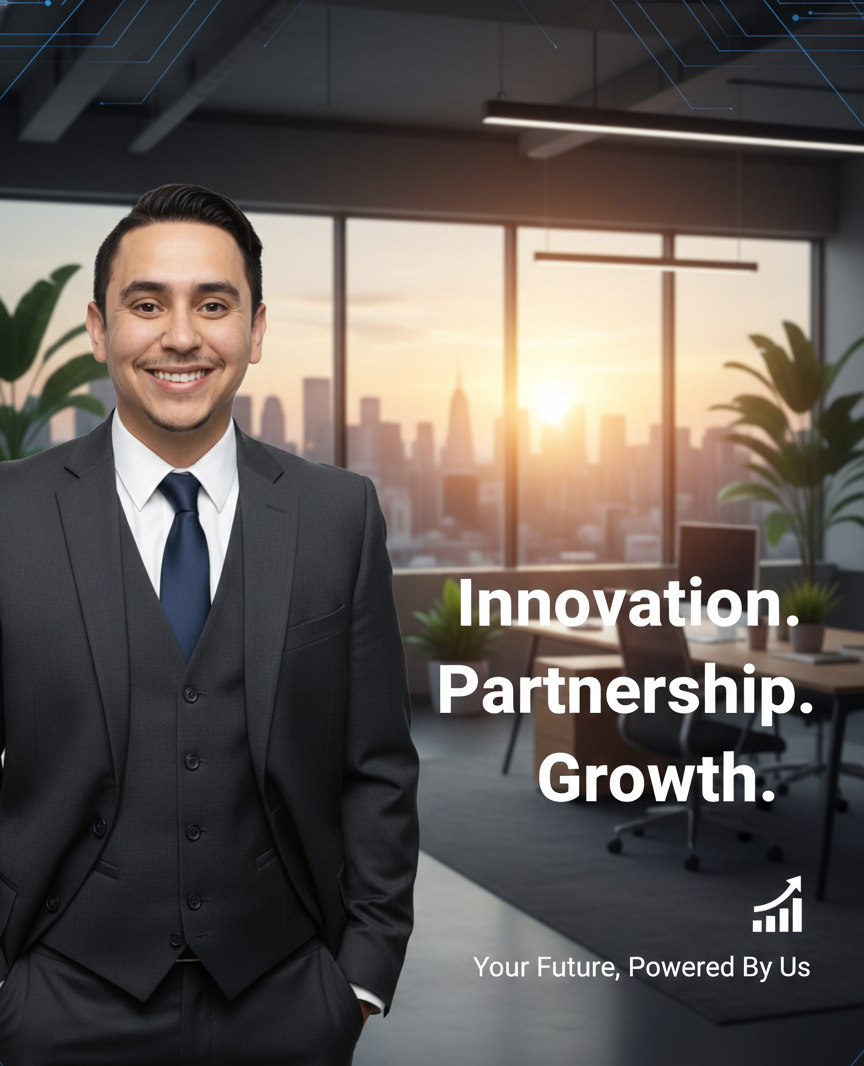
A Hispanic entrepreneur from Houston, Texas, with roots in Nicaragua. This is the story of turning struggle into strategy, failure into fuel, and experience into impact.

Professional Growth
The Beginning

Growing Up Without a Roadmap

I grew up poor. Not 'we couldn't afford vacations' poor—I mean real poverty. The kind where you learn early that no one is coming to save you, that opportunities aren't handed out, and that if you want something, you'd better figure out how to get it yourself.

I didn't have a mentor. I didn't have a family member who had 'made it' and could show me the way. I didn't have connections or a network or anyone who could open doors for me. Every career decision, every business move, every educational pursuit—I figured it out alone. There was no one to tell me which paths led somewhere and which were dead ends.

That experience was painful. I made mistakes that cost me years. I took jobs I shouldn't have taken. I missed opportunities I didn't even know existed. I learned lessons the hard way that someone could have taught me in a single conversation.

But that struggle also shaped everything I am today. It taught me resilience—the kind you can only develop when quitting isn't an option. It taught me resourcefulness—how to make something out of nothing, how to find a way when there doesn't seem to be one. It taught me the value of knowledge—because when you don't have connections or capital, what you know becomes your only competitive advantage.

Most importantly, it showed me exactly what I wanted to do with any success I achieved: ensure others don't have to navigate the same darkness alone.

"Most importantly, it showed me exactly what I wanted to do with any success I achieved: ensure others don't have to navigate the same darkness alone."

Why I Became an Entrepreneur

I didn't start businesses because I dreamed of being a CEO or wanted to be my own boss. I became an entrepreneur out of necessity. I needed to support my family. I needed to fund my education. And I quickly realized that a traditional job—even a good one—wasn't going to get me where I needed to go fast enough.

My first ventures were scrappy. I did whatever I could to generate income while going to school. I learned marketing not from textbooks but from necessity—I had to figure out how to get customers, how to deliver value, how to make something work with zero budget.

Over time, those early experiments evolved. I got better. I learned what worked and what didn't. I developed systems and processes. And eventually, those scrappy side projects became the foundation of the 23-domain marketing empire I run today.

Every business I've built, every dollar I've earned, has been fuel for the next chapter of growth. The revenue from one venture funds the launch of the next. The lessons from one failure inform the strategy of the next success. It's all connected.

Athlete Mindset

From the Field to the Boardroom

⚾ Baseball ⚽ Soccer Youth through High School

I played baseball and soccer from childhood through high school. At the time, I didn't realize how profoundly those years on the field would shape my approach to business. Looking back, I can draw direct lines from lessons I learned in sports to strategies I use in entrepreneurship every day.

1

Discipline & Daily Practice

Sport Context

In baseball, you don't become a good hitter by practicing once a week. You show up every day. You take hundreds of swings. You do the boring, repetitive work even when you don't feel like it. The same was true in soccer—conditioning, drills, practicing the same plays over and over until they became automatic.

Business Application

Building a business requires the exact same discipline. There are no shortcuts. You have to show up every day, even when you're tired, even when you're not motivated, even when it feels like you're not making progress. Success isn't about one big breakthrough—it's about consistent effort over time. The entrepreneurs who win are the ones who keep showing up.

2

Handling Failure & Rejection

Sport Context

In baseball, even the best hitters in the world fail 7 out of 10 times. A .300 batting average—meaning you fail 70% of the time—makes you an All-Star. That reality teaches you something profound: failure isn't the exception, it's the norm. You can't let a strikeout or a bad game destroy your confidence.

Business Application

Entrepreneurship is the same. Most of what you try won't work. Most pitches will get rejected. Most campaigns will underperform. Most ideas will fail. If you let every failure crush you, you'll never make it. The athletes who succeed are the ones who can shake off a bad at-bat and step back into the box with confidence. The entrepreneurs who succeed are the ones who can learn from a failure, adjust, and try again without losing momentum.

3

Team Dynamics & Trust

Sport Context

No one wins alone in team sports. You have to trust your teammates to do their jobs. You have to play your role, even if it's not glamorous. You have to communicate, support each other, and put the team's success above your individual stats.

Business Application

Business is a team sport. I've built a 6-person remote team because I know I can't scale by doing everything myself. That means hiring people I trust, delegating effectively, and creating systems where everyone knows their role. The entrepreneurs who try to do everything themselves eventually burn out or plateau. The ones who build great teams can scale indefinitely.

4

Competition & Drive

Sport Context

Sports instilled a competitive fire that never leaves you. The desire to win, to outwork your opponents, to constantly improve—that becomes part of your DNA. You learn to love the competition, to embrace the pressure, to want the ball when the game is on the line.

Business Application

That competitive drive translates directly to business. I approach every market, every client, every deal with the same intensity I brought to game day. When I see competitors, I'm not intimidated—I'm energized. I want to outwork them, outthink them, outexecute them. That fire is what separates people who build something real from those who just talk about it.

5

Performing Under Pressure

Sport Context

The moments that define athletes are the high-pressure ones. Bases loaded, two outs, bottom of the ninth. Penalty kick in overtime. In those moments, you either execute or you don't. There's no hiding. You learn to manage your nerves, focus on the process, and trust your preparation.

Business Application

High-stakes business decisions feel the same way. When you're negotiating a major deal, pitching to investors, or making a bet-the-company decision, the pressure is real. The athletes who learned to perform under pressure become the executives who can make tough calls when it matters. I've been in those moments—and my sports background prepared me for them.

6

Being Coached & Coachable

Sport Context

Having coaches who pushed me, who were honest about my weaknesses, who held me to high standards—that taught me to value feedback and mentorship. I learned that being coachable, being willing to listen and adjust, is what separates good athletes from great ones.

Business Application

I carry that coachability into business. Even now, I seek out people smarter than me and listen when they speak. I hire advisors. I read voraciously. I'm not too proud to admit what I don't know. And now, I pay forward what my coaches gave me—I mentor others with the same honesty and high standards that helped me grow.

The sports career ended after high school, but the athlete's mindset never left. It's embedded in how I work, how I compete, how I lead, and how I mentor others.

Academic Foundation

I've invested heavily in my education—not just for the credentials, but because knowledge is the great equalizer. When you don't have connections or capital, what you know becomes your competitive advantage.

Boston University MBA
Boston University, Questrom School of Business

Master of Business Administration (MBA)

The MBA gave me a comprehensive foundation in business strategy, marketing management, finance, and organizational leadership. But more than the coursework, it taught me to think systematically about business problems. I learned frameworks for analyzing markets, building strategies, and scaling ventures that I still use today.

Key Takeaways
  • Strategic thinking frameworks for market analysis and competitive positioning
  • Financial modeling and understanding of business economics
  • Leadership and organizational behavior principles
  • Marketing strategy beyond tactics—understanding customer psychology and market dynamics
  • Network of ambitious professionals across industries
Software Engineering
Boston University

MS in Software Engineering

The technical degree might seem unrelated to my marketing career, but it's actually the backbone of everything I build. Understanding systems design, automation, and digital infrastructure allows me to create scalable operations that most marketers can't. I can talk to developers, evaluate technical solutions, and build tools that give my businesses a competitive edge.

Key Takeaways
  • Systems thinking and architecture design
  • Automation and process optimization
  • Technical literacy to evaluate and implement solutions
  • Ability to communicate with engineering teams effectively
  • Foundation for building scalable digital operations
Harvard Business School

Executive Certification

The Harvard certification represented executive-level training in leadership, strategy, and business transformation. It exposed me to how the world's top business minds think about problems and gave me frameworks used by Fortune 500 executives.

Key Takeaways
  • Executive leadership and decision-making frameworks
  • Business transformation and change management
  • Strategic thinking at the enterprise level
  • Case study methodology for analyzing complex business situations
  • Credibility and network from a premier institution

Undergraduate Foundation

Foundation in Biology & Physiology from Case Western Reserve University School of Medicine. This scientific foundation is what led me to medical research before I transitioned to marketing. Understanding physiology and research methodology shaped how I approach problems systematically.

Professional Experience

15+ years of Fortune 500 marketing leadership combined with entrepreneurial ventures. Here's the detailed trajectory:

Advertising Demand Generation Manager

Innodata Inc.
November 2024 – Present

Leading demand generation strategy and digital advertising initiatives for an AI and data services company. Managing multi-platform campaigns across Google, Meta, and LinkedIn with direct accountability for revenue generation.

Responsibilities
  • Developing and executing demand generation strategies across multiple digital channels
  • Managing advertising budgets and optimizing for ROI
  • Collaborating with sales teams to ensure lead quality and conversion
  • Analyzing campaign performance and making data-driven optimizations
  • Building and managing the marketing technology stack
Results

Implementing comprehensive lead generation systems that align marketing efforts with revenue goals.

Senior Marketing Manager

United States Gold Bureau
Previous Role

Directed marketing strategy for a precious metals investment company, managing high-value customer acquisition and retention programs in a complex, high-ticket sales environment.

Responsibilities
  • Developing marketing strategies for high-net-worth customer acquisition
  • Managing multi-channel campaigns including digital, direct mail, and broadcast
  • Optimizing the customer journey for high-ticket purchases ($10K-$500K+)
  • Building relationships with media partners and negotiating placements
  • Analyzing customer lifetime value and optimizing acquisition costs
Results

Successfully scaled customer acquisition while maintaining profitability in a competitive market.

Senior Advertising Manager

Boeing
Previous Role

Managed digital advertising platforms and collaborated with marketing leadership on enterprise-level campaigns for one of the world's largest aerospace and defense companies.

Responsibilities
  • Managing digital advertising across multiple platforms for enterprise campaigns
  • Navigating complex compliance and approval processes in aerospace/defense
  • Collaborating with global marketing teams across business units
  • Developing measurement frameworks for brand and demand campaigns
  • Managing agency relationships and optimizing media spend
Results

Delivered enterprise-level campaigns with measurable impact on brand awareness and lead generation.

Senior Advertising Manager

Syneos Health
Previous Role

Oversaw paid social media campaigns for healthcare and pharmaceutical clients, navigating the complex compliance requirements unique to the industry while driving measurable performance.

Responsibilities
  • Managing paid social campaigns for pharmaceutical and healthcare clients
  • Ensuring compliance with FDA regulations and industry guidelines
  • Developing targeting strategies for healthcare professionals and patients
  • Optimizing campaigns for both awareness and conversion objectives
  • Reporting on campaign performance to clients and stakeholders
Results

Successfully balanced compliance requirements with performance goals in a highly regulated industry.

Demand Generation Manager

Kalix Marketing Group
Previous Role

Optimized marketing tactics using data-driven approaches. This role was foundational in developing the strategies and systems that would later inform my own business ventures.

Responsibilities
  • Developing and executing demand generation strategies
  • Building marketing automation workflows and lead nurturing sequences
  • Analyzing marketing data to identify optimization opportunities
  • Collaborating with sales teams on lead management and conversion
  • Testing new channels and tactics for customer acquisition
Results

Developed foundational strategies for lead generation that became the basis for my own agency portfolio.

Enterprise Clients Served

Throughout my Fortune 500 career, I've worked on campaigns for some of the world's most recognizable brands:

Google
Apple
Amazon
Meta (Facebook)
Microsoft
Boeing
Sally Beauty
Syneos Health
US Gold Bureau
Innodata

This experience taught me how to think at scale, navigate complex organizations, and deliver results with significant budgets and accountability.

Medical Research Career

Before marketing, I spent over a decade in medical research. This experience shaped how I think about problems, data, and impact.

70+
Research Citations
Peer-reviewed publications cited by researchers worldwide
1,040+
Volunteer Hours
Clinical service supporting patients and research
10+
Years in Research
From undergraduate through professional research roles

MD Anderson Cancer Center

Research Volunteer & Patient Support

MD Anderson is consistently ranked as one of the top cancer centers in the world. I supported palliative care research and assisted cancer patients during outpatient visits. This experience taught me about resilience, mortality, and what truly matters in life. Working with patients facing terminal diagnoses gave me perspective that shapes everything I do today.

Baylor College of Medicine

Neurology Research Assistant

As a Neurology Research Assistant, I collaborated with a team of seven doctors on clinical research projects. This was a high-pressure environment that demanded precision, attention to detail, and the ability to work effectively in a team. The research methodology I learned here—forming hypotheses, designing studies, analyzing data—directly informs how I approach business problems.

UT Behavioral Center

Psychiatry Technician (Night Shift)

Working night shifts at a behavioral health facility was one of the most challenging and rewarding experiences of my life. I provided care and support to patients with mental health conditions, developing empathy, crisis management skills, and emotional resilience. The ability to stay calm under pressure and handle difficult situations serves me well in business.

Houston Museum of Natural Science

Museum Presenter

While not medical research, this role was formative in developing my communication skills. I engaged visitors with exhibits about dinosaurs, ancient civilizations, and wildlife, learning to make complex information accessible and engaging. These storytelling and public speaking skills are essential in marketing and mentorship.

Published Research

My research focused on palliative care, cancer patient outcomes, and symptom assessment methodologies. Key publications include:

Perception of Helpfulness of a Question Prompt Sheet Among Cancer Patients Attending Outpatient Palliative Care

Peer-reviewed medical journal

Research examining how tools designed to help cancer patients communicate with healthcare providers are actually perceived and used by patients.

Edmonton Symptom Assessment Scale Time Duration of Self-Completion Versus Assisted Completion in Patients with Advanced Cancer: A Randomized Comparison

The Oncologist

A randomized study comparing different methods of symptom assessment in advanced cancer patients, with implications for clinical practice.

Advanced Cancer Patients' Self-Reported Perception of Timeliness of Their Referral to Outpatient Supportive/Palliative Care

Peer-reviewed medical journal

Research examining when patients feel they should be referred to palliative care, with implications for improving patient outcomes.

Medical research taught me to think systematically, question assumptions, test hypotheses, and make decisions based on evidence rather than intuition. These skills have been invaluable in business. When I test a marketing campaign, I approach it like a clinical trial—with clear hypotheses, controlled variables, and rigorous analysis of results.

Personal Background

Heritage & Roots

I'm a Hispanic entrepreneur with roots in Nicaragua. My family's journey from Central America to Houston shaped my perspective on opportunity, hard work, and resilience. Being bilingual in English and Spanish has opened doors throughout my career and allows me to serve a broader range of clients and mentees.

Personality

I'm an INFJ personality type—driven by purpose and deep connections. I'm not interested in superficial networking or transactional relationships. When I work with someone, whether as a client or a mentee, I invest in their success because I genuinely care about their outcomes. This personality type is relatively rare and characterized by a combination of introversion with a strong focus on helping others.

Philosophy

I believe success isn't just about what you achieve, but who you help along the way. Every setback is data—information you can use to make better decisions. Every failure is curriculum—a lesson that prepares you for future success. The goal isn't perfection; it's progress. If you're moving forward, you're winning.

What Drives Me

I'm motivated by impact, not just income. Yes, I want to build successful businesses and achieve financial freedom. But the reason I mentor, the reason I created this website, is because I remember what it felt like to have no one to turn to. If I can help someone avoid years of struggle by sharing what I've learned, that's more valuable to me than any deal.

Ready to Write Your Own Story?

Whether you're looking to start your entrepreneurial journey, scale your existing business, or simply find direction, I'm here to help guide the way.